
Ceramides for your face: proven benefits, types, and the 2026 user guide
Quick answer: Ceramides are lipids naturally present in the stratum corneum, and they make up 50% of your skin barrier. Applied topically, they cut transepidermal water loss by 50% in 4 weeks and significantly improve hydration, elasticity, and tolerance in sensitive skin, according to the published clinical studies.
These essential molecules naturally decline with age, down by as much as 30% after 40, which explains growing dryness and the arrival of dehydration lines. Add ceramides to your skincare routine, and you restore this fundamental barrier function and get more out of every other active you use.
What ceramides are, and why they're essential
Quick answer: Ceramides are sphingolipids that make up 50% of the intercellular lipids in the stratum corneum, forming the "cement" between skin cells.
To grasp their importance, picture your skin as a brick wall: corneocytes (dead cells) are the bricks, and ceramides are the mortar holding them together. Without that lipid cement, the skin barrier turns porous. Moisture escapes. Irritants get in.
The stratum corneum contains three essential lipid types in precise proportions:
- Ceramides: 50% — structure and impermeability
- Cholesterol: 25% — membrane fluidity
- Free fatty acids: 15% — cohesion and skin pH
This composition, called the "physiological ratio," is crucial. A study published in the Journal of Investigative Dermatology shows that applying topical ceramides in this optimal ratio improves barrier function significantly more than ceramides alone [1].
With age, natural ceramide synthesis declines. After 40, skin ceramide levels drop 30% compared with young skin, according to a study in Skin Pharmacology and Physiology [2]. That decline explains why mature skin gets drier, more sensitive, and more prone to fine lines.
The 9 types of ceramides: which to choose
Quick answer: Human skin has 9 subclasses of ceramides, but ceramides 1, 3, and 6-II work best topically to restore the skin barrier.
Ceramide naming can get confusing. Here are the two systems you'll see on cosmetic labels:
| INCI name | Former name | Main function |
|---|---|---|
| Ceramide EOS | Ceramide 1 | Lamellar structure, long-lasting hydration |
| Ceramide NS | Ceramide 2 | The most abundant in nature |
| Ceramide NP | Ceramide 3 | Hydration, barrier repair |
| Ceramide AP | Ceramide 6-II | Cell renewal, desquamation |
| Ceramide EOP | Ceramide 9 | Very long chain, atopic skin |
The ceramides to favor:
- Ceramide NP (formerly ceramide 3) — The most clinically studied. Excellent penetration and barrier restoration. Found in most effective formulas.
- Ceramide AP (formerly ceramide 6-II) — Regulates natural desquamation and supports healthy cell renewal. Especially useful for dull or thickened skin.
- Ceramide EOS (formerly ceramide 1) — A unique structure with a very long carbon chain. Essential to the lamellar organization of skin lipids.
A complete formula that combines several ceramides with cholesterol and fatty acids will always beat a single isolated ceramide. That's what's called a "biomimetic lipid complex."
Scientifically proven benefits
Quick answer: Clinical studies show that topical ceramides reduce transepidermal water loss by 50%, improve hydration by 109%, and reduce signs of skin sensitivity within 4 to 8 weeks.
Skin barrier restoration
A randomized double-blind study published in theInternational Journal of Cosmetic Science measured a 50% reduction in transepidermal water loss (TEWL) after 4 weeks of applying a ceramide cream, against only 14% for the placebo [3].
Deep, lasting hydration
Ceramides work differently from classic humectants like hyaluronic acid. Rather than attracting water, they hold it in by sealing the barrier. One study showed a 109% improvement in stratum corneum hydration after 6 weeks of use [4].
Calmer sensitive skin
Sensitive and reactive skin consistently shows lower-than-normal ceramide levels. Research in the British Journal of Dermatology showed that ceramide supplementation significantly reduces tightness, stinging, and redness [5].
Anti-aging action
By restoring the integrity of your skin barrier, ceramides let you:
- Reduce dehydration lines (visible within 2 weeks)
- Improve skin firmness by optimizing the cellular environment
- Boost the effectiveness of your other anti-aging actives (retinol, vitamin C)
Eczema and atopic dermatitis
People with atopic dermatitis show deficits in EOS and NP ceramides. Several studies show that ceramide-enriched emollients reduce flare severity and cut the need for corticosteroids [6].
How to tell if your skin lacks ceramides
Quick answer: A ceramide-depleted skin barrier shows up as persistent dryness despite moisturizing, heightened sensitivity, and a rough or flaky texture.
Here are the telltale signs of a ceramide deficit:
- Stubborn dryness — Your skin stays dry even after classic moisturizers
- Frequent tightness — Discomfort after cleansing, even with gentle products
- New sensitivity — Products you tolerated before now cause reactions
- Grainy texture — Small rough patches to the touch, a "crinkled paper" look
- Dehydration lines — Fine lines that come and go with hydration
- Diffuse redness — Uneven complexion, reactive patches
- Actives penetrating too much — Serums "sting" more than they used to
Aggravating factors:
- Age (natural decline after 30, faster after 40)
- Harsh cleansers (sulfates, alkaline soaps)
- Excessive exfoliation (acids, scrubs used too often)
- Dry or cold climate
- Retinol that's badly dosed or badly introduced
- Certain medications
User guide: when and how to apply them
Quick answer: Apply ceramides morning and evening, after water-based serums and before oils or occlusive creams, on slightly damp skin for the best absorption.
Where they go in your routine
- Gentle cleanse (pH 5.5, sulfate-free)
- Hydrating toner/essence
- Active serums (vitamin C in the morning, retinol in the evening)
- Ceramide serum or cream ← right here
- Face oil (optional, to seal)
- Moisturizer (if your ceramide product isn't rich enough)
- SPF 30+ (morning only)
Recommended frequency
Ceramides don't cause sensitization, so you can use them daily, morning and evening. For badly damaged skin (post-treatment, eczema), applying them two to three times a day speeds up repair.
Effective concentration
Clinical studies generally use ceramide concentrations of 0.5% to 2%. On the INCI label, ceramides should appear in the first half of the list to be effective.
Time to results
| Benefit | Average time |
|---|---|
| Immediate comfort, less tightness | 24-48 hours |
| Measurable hydration gain | 1-2 weeks |
| Fewer dehydration lines | 2-4 weeks |
| Full barrier restoration | 4-8 weeks |
| Less chronic sensitivity | 6-12 weeks |
Optimal pairings with other actives
Quick answer: Ceramides pair ideally with hyaluronic acid, niacinamide, and cholesterol for maximum synergy. They're also excellent at buffering retinol irritation.
Synergistic pairings (excellent)
- Ceramides + Hyaluronic acid — HA attracts water, ceramides hold it in. The ideal combination for complete hydration.
- Ceramides + Niacinamide (vitamin B3) — Niacinamide stimulates your skin's own ceramide production. Double benefit.
- Ceramides + Cholesterol + Fatty acids — The physiological trio. Look for "skin-identical lipid" formulas.
- Ceramides + Squalane — Squalane reinforces occlusion without weighing skin down. Perfect for combination skin.
- Ceramides + Panthenol (vitamin B5) — Soothing and faster repair for irritated skin.
Recommended pairings (good)
- Ceramides + Retinol — Ceramides applied before or after retinol reduce irritation by 40%, according to the studies [7]. An effective "sandwich" technique.
- Ceramides + Vitamin C — No incompatibility. Ceramides stabilize the barrier while vitamin C does its antioxidant work.
- Ceramides + AHA/BHA — Apply ceramides after acids to restore the barrier post-exfoliation.
Neutral pairings
- Ceramides + Peptides — No particular synergy, but no incompatibility either.
- Ceramides + Bakuchiol — A gentle alternative to retinol, well tolerated together.
There's no known major incompatibility with ceramides. Their lipid nature and their mechanism (structural reinforcement) make them compatible with nearly every cosmetic active.
Ceramides and LED light therapy: a proven synergy
Quick answer: Red light (630-660nm) stimulates fibroblast activity and improves skin lipid synthesis, boosting the effectiveness of topical ceramides.
Red LED photobiomodulation acts through several mechanisms that complement ceramides:
- Mitochondrial stimulation — Red light activates cytochrome c oxidase, raising cellular ATP production by 15-20% [8].
- Collagen synthesis — A study by Wunsch and Matuschka (2014) shows a 36% reduction in wrinkles and a 19% improvement in elasticity after 12 weeks [8].
- Better microcirculation — A better nutrient supply to skin cells, optimizing their ability to synthesize and use lipids.
Optimal combined protocol
- Gentle cleanse your skin
- LED session (10-15 minutes, 3-5 times a week)
- Ceramide serum right after. Receptive skin absorbs actives better
- Moisturizer to seal
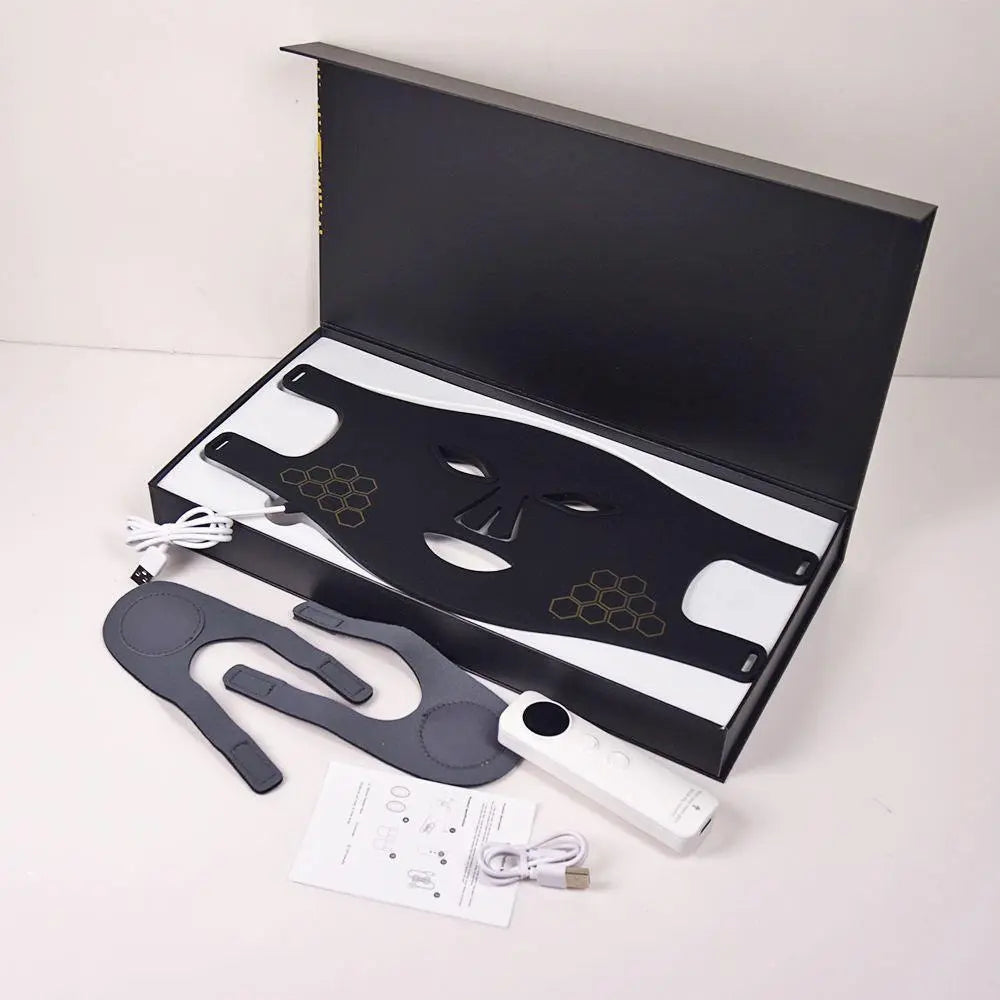
This sequence lets you benefit from the cell stimulation LED triggers while supplying the lipid building blocks your barrier needs to rebuild. Users of LED masks like the NEOCELL PRO report faster gains in hydration and glow when they pair their sessions with ceramide skincare.
Sources
- Imokawa G et al., 2001 — Role of ceramides in barrier function of the stratum corneum
- Rogers J et al., 1996 — Stratum corneum lipids: the effect of ageing
- Chamlin SL et al., 2002 — Ceramide-dominant barrier repair lipids
- Di Nardo A et al., 2014 — Ceramide and cholesterol composition of the skin
- Choi MJ & Maibach HI, 2005 — Role of ceramides in barrier function
- Sugarman JL, 2008 — Barrier repair in atopic dermatitis
- Draelos ZD, 2011 — Ceramides and retinol combination therapy
- Wunsch A & Matuschka K, 2014 — Red light and skin rejuvenation
Ceramides are a cornerstone of any serious skincare routine. Pair them with regular cell stimulation, LED light therapy in particular, and you lastingly restore your skin barrier's integrity and get more out of every product you use.